Few school decisions divide Ghanaian families as sharply as boarding. One parent remembers their own boarding years with enormous affection and wants the same for their child. The other cannot imagine sending a twelve year old away and believes a child belongs at home. Both positions are reasonable, and both can be right, depending on the child.
This article sets out the real advantages and real costs of each option, the questions to ask any boarding facility before you commit, and how to judge which arrangement suits your own child rather than your own memories.
Why Boarding Has Such a Strong Tradition in Ghana
Boarding is woven into Ghanaian education history. For generations, the country’s strongest secondary schools were boarding schools, and a boarding place was understood as the route to a disciplined, focused education and a lifelong network of friends.
That tradition is not sentimental nonsense. Boarding genuinely solves problems that day schooling cannot. It removes the daily commute, it protects study time, it enforces routine, and it surrounds a child with peers who are all working towards the same goal.
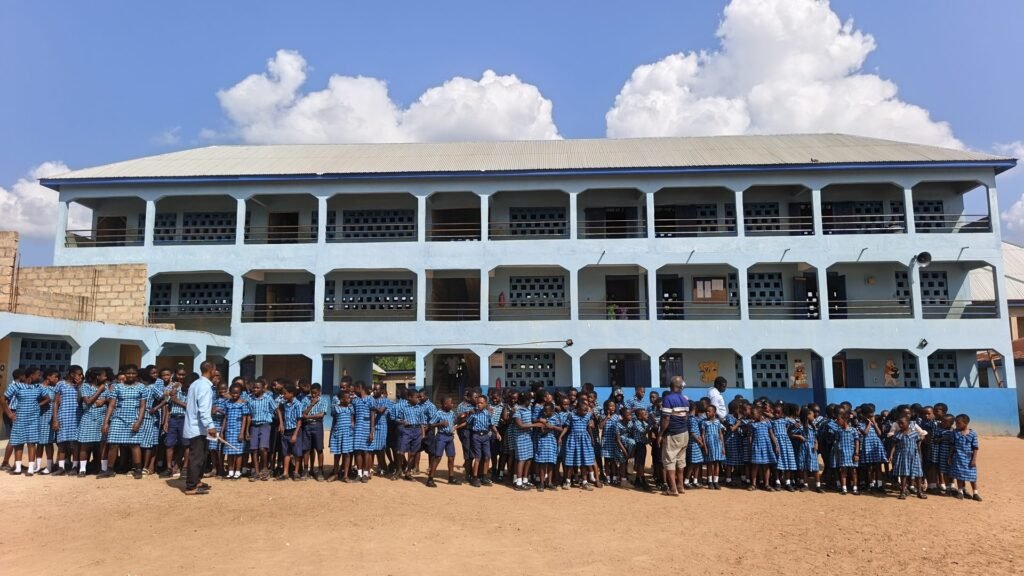
The Case for Boarding
Time is recovered
A child commuting ninety minutes each way loses fifteen hours a week. Over a three-year JHS programme, that is the equivalent of an entire academic term spent in a trotro. Boarders get that time back, and most of it goes into study and sleep.
Routine is enforced, not negotiated
Prep at a fixed hour, lights out at a fixed hour, meals at a fixed hour. At home, study time competes with errands, visitors, television, phones and younger siblings. In boarding, the structure does the work that willpower has to do at home.
Independence develops early
Boarders learn to manage their own belongings, budget small amounts of money, resolve disputes without a parent intervening, and ask an adult for help. These are not trivial skills. They are exactly what a child will need in senior high school and beyond.
Teachers are close by
In a well-run boarding house, a child struggling with Mathematics at 7pm can find help at 7pm. That immediacy is difficult to replicate at home unless a parent is both available and confident in the subject.
Peer culture pulls upward
A child surrounded by children who read, revise and take school seriously will usually do the same. Peer influence is one of the most powerful forces in adolescence, and boarding puts it to work.
The Case for Day Schooling
The family bond stays strong
Children who go home daily stay embedded in family life, in their faith community, in their extended family. For many Ghanaian families this is not a minor consideration; it is the point.
Parents see problems immediately
A day student who is being bullied, who is unwell, who is anxious, shows it at the dinner table. In boarding, the same child may hide it for weeks.
It usually costs less
Boarding adds feeding, accommodation and provisions to the bill. For many families the difference decides the matter, and there is no shame in that.
Younger children are often simply not ready
Emotional readiness for boarding varies enormously. A confident thirteen year old may thrive. A nine year old who has never slept away from home may not, and an unhappy boarder does not learn well.
Diet and health are easier to manage
A child with a medical condition, a restricted diet or a tendency to illness is often better supervised at home.
How to Judge Which Suits Your Child
Put your own preferences aside for a moment and answer these honestly:
- Does your child cope well away from home? Weekends with relatives or school trips are a useful test.
- Is your child self-directed or does learning only happen when you are standing over them? A child who needs structure often blossoms in boarding. A child who needs emotional reassurance often does not, at least not yet.
- How long is the daily commute? Beyond about forty-five minutes each way, the arithmetic starts favouring boarding.
- How settled is home at the moment? A new baby, a bereavement or a recent move can make boarding either a refuge or an abandonment, depending on the child.
- Can you afford it comfortably for the full programme? Withdrawing a child mid-programme because of cost is disruptive and damaging.
The question is not whether boarding is better. It is whether boarding is better for this child, at this age, in this family, right now.
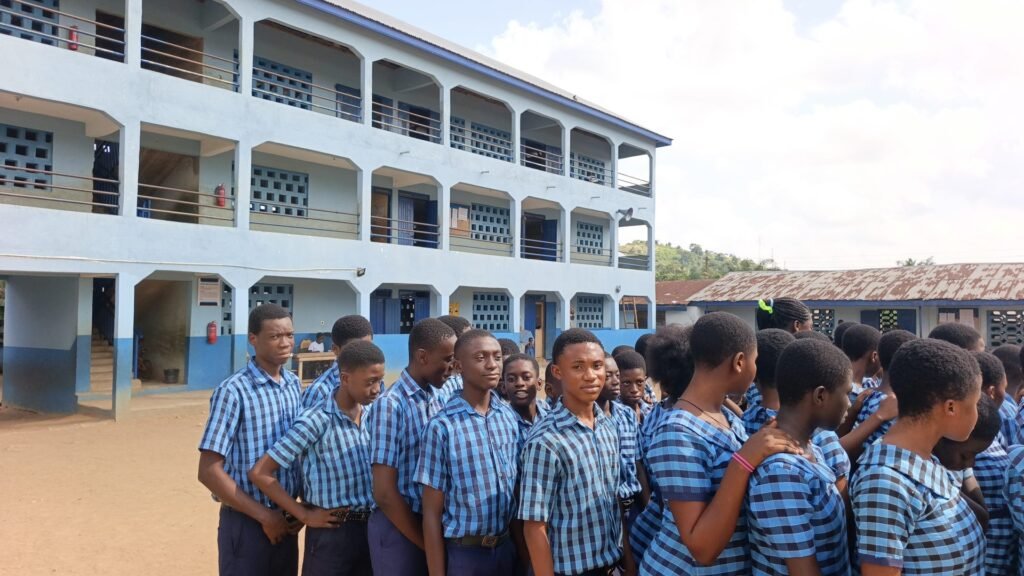
Questions to Ask Any Boarding Facility
If you are considering boarding, visit the dormitory, not just the classrooms, and ask:
- How many students share a dormitory, and how many house staff supervise overnight?
- What exactly is the daily timetable, from waking to lights out?
- What is on the menu over a full week, and who plans it?
- Where do students wash, and is there reliable water?
- What is the sick bay arrangement, and how quickly are parents contacted?
- How and when may students contact home?
- What is the visiting day policy?
- What happens when a student is bullied, and can you see the record of how the last incident was handled?
- What security exists at night, and who can enter the compound?
A confident, well-run facility will answer all of these without hesitation. Vagueness is your answer.
Helping a New Boarder Settle
If you do choose boarding, the first term is the one that matters. A few things help:
Label everything. Lost provisions and missing uniform cause more early distress than homesickness does. Pack familiar items, a photograph, a favourite blanket. Agree a clear communication routine before the term begins so your child is not waiting by a phone that was never going to ring. Resist the urge to withdraw at the first tearful call; most homesickness resolves within three to four weeks. And speak to the house parent early rather than waiting for visiting day.
Boarding at Oyoko New Life School
Oyoko New Life School currently runs as a day school from crèche through to JHS 3, 4km north of Koforidua in the New Juaben Municipal. Safe, well-supervised boarding facilities are coming soon, designed around the same principles that guide the rest of the school: close supervision, trained staff, clear routine and a child-friendly environment.
If boarding is something you are considering for your child, talk to us about what is planned and when places will be available.
What Boarding Really Costs
Boarding fees are only part of the picture. Before committing, add up the full annual cost honestly:
- Boarding and feeding fees per term
- Provisions sent with the child each term, and top-ups during the term
- Bedding, bucket, mattress, trunk or chop box, mosquito net and other prescribed items
- Uniform, sportswear and house wear
- Transport to and from school at the start and end of each term, plus visiting days
- Pocket money
- Medical costs and NHIS renewal
Families frequently budget for the fees and are caught out by the provisions and travel, which recur every term. Work out the yearly figure, not the termly one, before deciding.
Preparing a Child in the Months Before
If boarding is the plan, the preparation is as much emotional and practical as it is financial. In the months beforehand, teach your child to:
- Wash and iron their own clothes
- Keep their belongings in one place and notice when something is missing
- Manage a small weekly amount of money without running out
- Speak up to an adult when something is wrong
- Sleep and wake to a fixed schedule
A child who arrives able to do these things settles in weeks rather than months. A child who has never washed a shirt will spend their first term learning that instead of learning Mathematics.
Signs Boarding Is Not Working
Most homesickness passes. Some situations do not, and parents should know the difference. Be alert to a child who loses weight noticeably, who becomes withdrawn or unusually quiet on visiting days, whose grades fall sharply over two consecutive terms, who begs not to return each time, or who is vague and uncomfortable when asked about other students.
Any of these warrants a conversation with the house parent and the school, and sometimes a decision to bring the child home. Changing course is not a failure. Leaving a child in a situation that is harming them is.
A Middle Path Worth Considering
Some families find a workable compromise: day schooling during basic school, when a child is young and benefits most from home, and boarding from senior high school, when independence is both more appropriate and more useful. For many Ghanaian children this sequence gives the best of both, and it is the pattern most families eventually settle on.
Frequently Asked Questions
Is boarding school better than day school in Ghana?
Neither is universally better. Boarding suits children who benefit from structure, have long commutes or are emotionally ready for independence. Day schooling suits younger children, those with health needs and families who want daily contact.
At what age should a child go to boarding school?
Most children are emotionally ready somewhere between eleven and thirteen, but readiness varies widely. Temperament matters more than age.
What should I ask before choosing a boarding facility?
Ask about dormitory numbers and overnight supervision, the daily timetable, the weekly menu, water and washing facilities, sick bay arrangements, contact with home, bullying procedures and night security.
How do I help my child settle into boarding?
Label all belongings, pack familiar items, agree a communication routine in advance, stay calm through early homesickness and build an early relationship with the house parent.
Does Oyoko New Life School offer boarding?
Boarding facilities are coming soon. The school currently operates as a day school from crèche to JHS 3.
Talk to Us About the Right Fit
Every child is different, and we are happy to talk through the decision honestly, even if the answer is that your child should stay at home for now.