The week before a new term begins is rarely calm. Uniforms have been outgrown, exercise books have disappeared, the school bag has one working zip, and somebody remembers at nine o’clock the night before that mathematical sets were on the list.
A little planning removes almost all of that stress, and usually saves money too. This is a complete back-to-school checklist for Ghanaian parents, covering everything from stationery and uniform to health, budgeting and getting a child’s mind ready for the classroom again.
Start Two Weeks Before the Term, Not Two Days
Prices rise as the reopening date approaches. Stationery sellers know exactly when schools resume, and the week before reopening is the most expensive week of the year to buy anything. Shopping a fortnight early typically saves a meaningful amount and spares you the crowds.
Begin by finding last term’s list, the one the school issued, and checking what survived the holidays. Most families discover they need far less than they assumed.
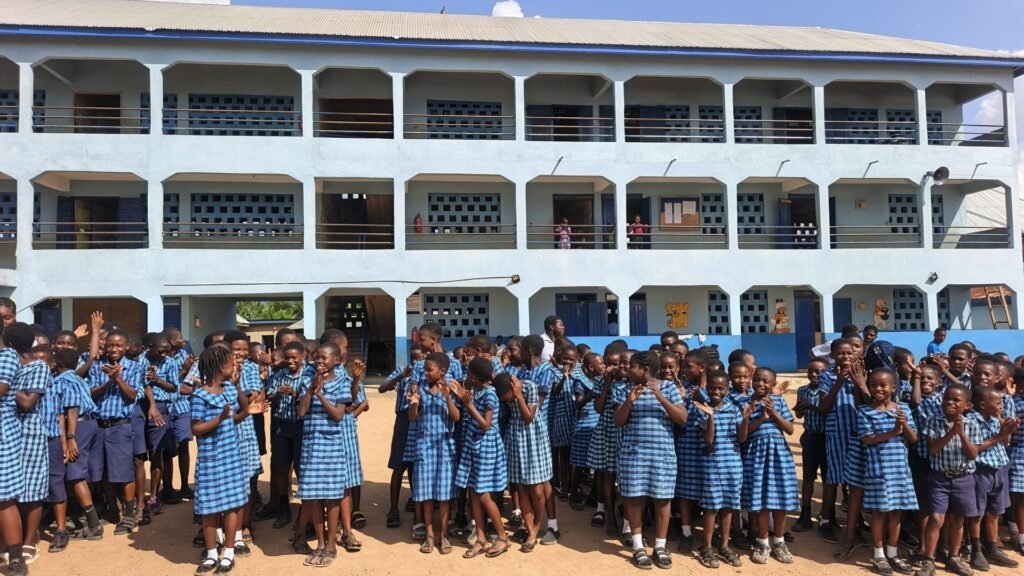
1. Uniform and Clothing
Check fit before you buy anything. Children grow in bursts, and a uniform that fitted in July may be tight by January.
- School uniform, at least two sets so one can be washed while the other is worn
- Sportswear or PE kit, since Physical Education is a practical subject under the GES curriculum
- Appropriate footwear and at least three pairs of socks
- A cardigan or light sweater for harmattan mornings
- A raincoat or umbrella during the rainy season
Two practical tips. Buy uniform slightly roomy rather than exact, and hem it, so it lasts the full year. And write your child’s name inside every single item. Unlabelled uniform disappears.
2. Exercise Books and Stationery
Use the school’s official list rather than guessing, but these are the staples for most basic school learners:
- Exercise books in the quantities and rulings the school specifies
- A notebook or jotter for homework
- Pencils for lower primary, pens for upper primary and JHS
- Eraser, sharpener and ruler
- Colouring pencils or crayons for Creative Arts
- A mathematical set from upper primary upwards
- Graph books where required
- A pencil case that closes properly
- Brown paper or plastic covering, and name labels
Covering and labelling books is worth the evening it takes. Books that are covered last the term; books that are not are usually replaced by week six.
3. The School Bag
A good bag is an investment. Look for two padded shoulder straps rather than one, reinforced stitching at the base, and a size proportionate to your child. An oversized bag encourages children to carry everything every day, which is bad for their backs and bad for their books.
4. Food, Water and Daily Money
- A leak-proof water bottle, labelled
- A lunch box or flask if your child carries food
- An agreed, consistent amount of chop money
Concentration collapses on an empty stomach, and the heaviest classroom work usually happens mid-morning. Whether your child carries food or buys it, make sure they actually eat during the morning break and not only at closing.
Set the daily amount at the start of term and keep it predictable. Children manage money far better when the amount does not change daily.
5. Health Checks Before the Term
The holidays are the right time for the things that are impossible to arrange mid-term:
- A general check-up, especially if your child was unwell during the holidays
- Vision check if your child squints, sits very close to the board or complains of headaches
- Hearing check if teachers have mentioned inattention
- Dental check
- NHIS card renewal if it has expired
- Confirming the school has your current emergency contact numbers
Undiagnosed poor eyesight is one of the most common and most fixable causes of sudden academic decline. A child who cannot read the board is often mistakenly described as lazy.
6. Documents and School Administration
- Last term’s report card, signed where required
- Any fee receipts or payment arrangements
- Birth certificate or health records, if newly enrolling
- Updated contact details for both parents or guardians
- Transport arrangements confirmed in writing with whoever is driving
If your child is joining a new school, complete the admission paperwork before reopening rather than in the queue on day one. At Oyoko New Life School, you can complete the admission application online in about ten minutes.
7. Resetting the Routine
This is the step most families skip, and the one that makes the biggest difference to the first fortnight.
Shift bedtime gradually. Starting about a week before reopening, move bedtime and waking time back by fifteen to twenty minutes a day until you reach the school schedule. A child who goes from holiday hours to school hours overnight will spend the first week exhausted.
Restart light academic work. Twenty minutes of reading a day and some revision of last term’s work rebuilds the habit without feeling like punishment.
Talk about the term ahead. Ask what your child is looking forward to and what worries them. Children often carry anxieties about a particular subject or a particular classmate that a short conversation can defuse.
8. Budgeting Sensibly
School costs cluster unhelpfully at the start of term. A few habits soften the blow:
- Set aside a small amount each month rather than facing the full cost in one week.
- Buy exercise books and stationery in bulk with another family and split them.
- Pass uniform down between siblings where the condition allows.
- Ask the school early about payment arrangements rather than falling silent.
- Buy quality for the items that get daily punishment, bag and shoes, and economise on the rest.
9. The First Week Itself
Lay out uniform and pack the bag the night before, every night, for the first week. Arrive early on day one; a child who walks in late on the first morning starts the term flustered. And ask a specific question after school rather than a general one. “What did you do in Mathematics today?” gets an answer. “How was school?” gets a shrug.
A Printable Summary
- Uniform, sportswear, footwear, socks, sweater
- Exercise books, jotter, pens, pencils, eraser, sharpener, ruler
- Colouring materials, mathematical set, graph book
- Pencil case, book covering, name labels
- School bag, water bottle, lunch box
- Health checks, NHIS renewal, emergency contacts
- Reports, receipts, admission documents
- Bedtime reset, reading restarted, transport confirmed
Starting the Term Well at Oyoko New Life School
At Oyoko New Life School we follow the Ghana Education Service academic calendar and issue a clear requirements list for every class, from crèche through to JHS 3, so families know exactly what is needed before the term begins. Our teachers use the first week to settle children properly rather than rushing straight into coverage.
See our school events for term dates and activities, or browse the gallery to see a term in progress.
A Week-by-Week Countdown to Reopening
Two weeks before
Find last term’s requirements list and check what survived the holidays. Try on uniform and footwear. Buy stationery now, before prices climb. Book any medical, dental or eye appointments.
One week before
Buy and hem uniform, label every item, cover exercise books. Begin shifting bedtime earlier by fifteen to twenty minutes a day. Restart twenty minutes of daily reading. Confirm transport arrangements in writing.
Two days before
Pack the bag together so your child knows where everything is. Confirm the daily chop money amount. Charge or prepare any device the school allows. Lay out the full uniform, socks and shoes.
The night before
Early dinner, early bed, bag by the door. Agree what time you are leaving in the morning and set an alarm for fifteen minutes earlier than you think you need.
If Your Child Is Starting School for the First Time
A first term at crèche, nursery or KG is a milestone for the whole family, and a little preparation removes most of the tears.
- Visit the school together beforehand. Familiarity does most of the work. Let your child see the classroom and meet the teacher.
- Practise short separations. An hour with a relative, then two. Children learn that you always come back.
- Talk about it positively but honestly. Describe what will happen, including that you will leave and return at closing time.
- Say goodbye properly and go. Lingering at the door prolongs distress. A short, confident goodbye is kinder than a long, anxious one.
- Label absolutely everything, including water bottle, lunch box, sweater and shoes.
- Expect a few difficult mornings. Most children settle within two weeks.
If you are still deciding which class your child should join, our guide to crèche, nursery and KG in Ghana sets out the ages and what children learn at each stage.
Keeping the Momentum After Week One
Most families start a term well and drift by week four. Three habits prevent that: check the homework book every evening rather than every Sunday, keep bedtime consistent even when the house is busy, and read your child’s first assessment results carefully rather than filing them away. Catching a weak start in October is simple. Catching it in March is not.
Frequently Asked Questions
What should be on a back to school list in Ghana?
Uniform and sportswear, footwear, exercise books, pens and pencils, a mathematical set, colouring materials, a school bag, a water bottle, book covering and name labels, plus completed health checks and school documents.
When is the best time to buy school items?
About two weeks before reopening. Prices typically rise in the final week before schools resume.
How do I prepare my child mentally for a new term?
Shift bedtime gradually over the week before reopening, restart light reading and revision, and talk through what your child is looking forward to or worried about.
How can I reduce back to school costs?
Save monthly rather than in one lump, buy stationery in bulk with another family, pass uniform between siblings, and spend on quality only where items take daily wear.
Join Us This Term
If you are preparing for a new term and considering a school for your child in the Koforidua area, we would be glad to hear from you.